
I will begin with a personal experience. Back in 2010, while I was still in secondary school, I wrestled with a question that still haunts educators today. Around that period, Chinese phone manufacturers began releasing devices that could easily access the internet. However, the challenge back then was that the internet wasn't nearly as popular as mobile phone games. Every child or youth with a phone basically had it for the sole purpose of playing games.
Among the popular games were Snake, Bounce, Prince of Persia, and Mortal Kombat. Sometimes, we would play for as long as there was power in the phones, and we wouldn't put them down until they died or we couldn't find a place to charge them. The older generation condemned this usage, complaining that we were completely ignoring the "real" purpose of a phone—making calls and sending emails. It was a popular opinion that "children of nowadays" don't read; they only play games.
The Old Fear (And Why It's Not New)
Fast forward to today, and the fear of technological addiction is real. We see parents and teachers genuinely worried as the new generation spends hours scrolling through TikTok, Instagram, and WhatsApp statuses. They wonder if these children will ever catch up to the foundational intelligence of the older generation. They ask: Will these children ever know the first 20 elements in Chemistry, the Principles of Accounting, or so many other foundational concepts?
These concerns are understandable. Social media can be distracting, and endless scrolling can affect mental health and attention spans. But should we solve this by locking students out entirely?
From "Children of Nowadays" to CEOs
If we look at history, no matter how one might think a particular generation is worse, the civilization they bring must still surpass that of the previous one.
The very "children of nowadays" who were shamed for playing Snake in 2010 are now the ones leading the tech space and industries. Some are CEOs and founders of tech companies; others are founders of fintech startups. They are now training the older generation in those exact areas.
If we lock students out of social media and chatbots today, we are locking them out of the future. Pay close attention to what the current generation is doing: These are the ones building personalized chatbots and local language LLMs. They are the ones scaling their businesses globally with the internet. They are running vendor businesses through WhatsApp statuses and Instagram, navigating freelancing apps to secure global gigs, and using chatbots as study companions to make high grades in school and even in JAMB. They are building systems, designing prototypes, and launching startups with the very tools we want to ban.
The list goes on. We cannot afford to keep our eyes closed to innovation for fear of seeing a bad influence, or we might miss a thousand opportunities to learn something great. How can one build the next TikTok if they don't even know what TikTok is or how to navigate it? How can they learn the practical aspects of their field if they don't watch YouTube videos on them?
The Smart Compromise: Guided Engagement
So, if "Yes" (locking them out) kills innovation, and "No" (giving them absolute, unguided freedom) destroys their focus and values, what is the answer?
The best compromise lies in guided, intentional usage.
- In Schools: Students should be encouraged to use social media and chatbots to learn, explore, and innovate. They should be inspired to watch content that is creative and relevant to their fields. However, they must never be allowed to use these tools to cheat on tests or exams. The tools should be used as a study companion, not a replacement for their own brain.
- At Home: Parents should encourage their children to follow builders, entrepreneurs, and innovators online, rather than just mindless influencers. The goal is to shift the focus from passive consumption to active creation.
My Personal Strategy
On a personal level, I have had to set boundaries for myself. When I notice I am using my phone too much and find hard books boring, I close the phone to study my PDFs instead.
To onlookers, it may seem like I use my phone a lot, whereas in reality, I can accomplish much more than those who completely abstain from using it. I have built apps, systems,and closed business deals using my phone and laptop, all while leveraging the same social media and chatbots that some want to lock away.
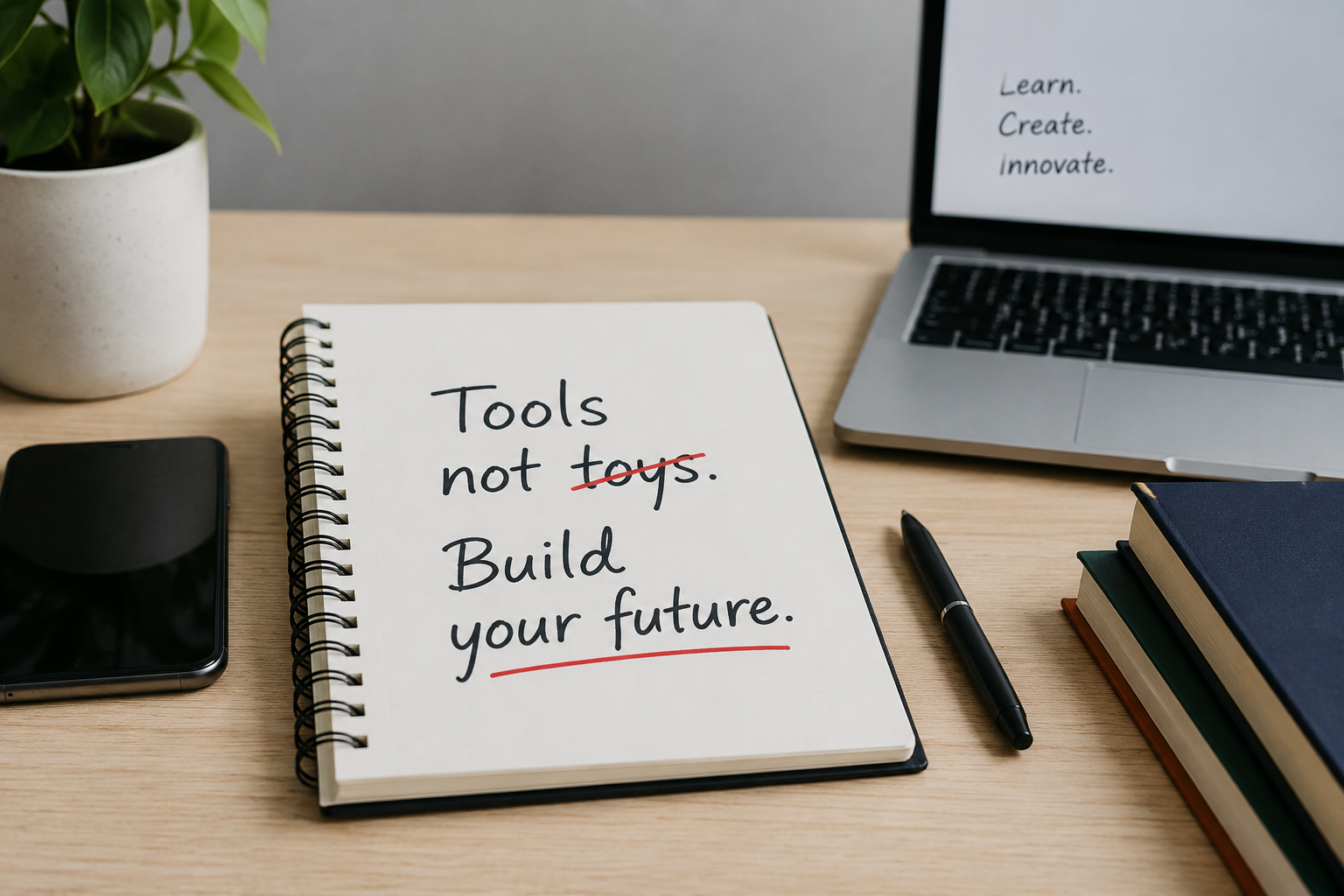
The modern student doesn't need a lockout; they need guidance on how to use these powerful tools to build their future. Let's stop treating the tools of the future like enemies, and start teaching the generation how to master them.
📖 ALSO READ: What Will You Offer When The Jobs Are Gone?